VALUE AS A SERVICE: EMBRACING THE COMING DISRUPTION

Rob Bernshteyn, Chief Executive Officer and President of Coupa, gives a step-by-step manual for today's business leaders on how they can better provide and measure the delivery of value to customers. The writer was driven by the desire to create dialog and industry about where things are going based on a lot of quantifiable successes, he alongside his group has generated in Coupa with their customers. The book summarizes the new standard brewing in business and examines how companies are gravitating offerings that offer a value to customers. Successfully delivering Value as an Agency requires a brand new sort of relationship between sellers and clients, one that's results-based, as opposed to a transactional exchange of services and goods for money.

It is more of a partnership where both parties are permitted to support each other as well as hold each other responsible for achieving measurable results they have both agreed upon. Rob went further to explain regions of change which will be required for a business comprising of individuals with a different skill to offer value as a service. Given that change is difficult and any type of business transformation generally encounters change immunity and making this change is the hardest portion of transitioning to value as a service, the right leadership ability is required to lead the business through.

Among the key elements needed according to Rob is the leader needs to work to instill a set of core values that the full company will also ascribe to be willing to work with. Signing up for value starts from your first commitment to your prospects. They ought to get a feeling of the value clients are achieving utilizing your service. Sales discussions should focus not only on features and functions, product demonstrations or product benefits. Instead, they ought to start as authentic and receptive learning sessions about the customer's strategic management, assets and needs. Rob describes one  Coupa strategy which has helped the organization sell value as a service.

He said, ”it is a policy from our business to sign a contract but to achieve an agreement on particular business success standards that we'll work together to attain. In our line of business, a typical arrangement could be that together we're going to save a hospital network $50 million on syringes, scrubs, bed linens, IT and maintenance and cut their order fulfillment and processing time by 60 percent. By working together to set these very specific, quantifiable goals, we're already setting the tone for another type of relationship.” This effort has to be supported through an internal culture of value creation that is based on worker empowerment. In Value as a Service world, the two parties involved should remain focused on what they're currently attempting to do together. This is where workers need the culture behind them. To get the best from your employees and clients, you want to create this culture.

And building this culture starts with clearly and frequently communicating the company values. Leadership should communicate them repeatedly until they’re tired of repeating them, and at that point, they should keep repeating them. To deliver Value as a Service, you should be able to put a greater burden of responsibility on staff members. That’s why they need a strong structure and culture supporting them. Skills are easy to learn, once you’ve made the mental shift. It’s the mind shift that delivers the value for both companies, and everyone involved.

Value as a service is an illumination of the future of business exchange, i.e. quantifiable value. You either provide it and compete or offer vague assurance, busy work and mere customers’ satisfaction on the road to irrelevance.  We no longer live in a world of product or services. Customers seek outcomes and brands promises is paramount. Value as a Service precisely highlights this shift to an outcome-based value approach and provides a roadmap on how to excel in a future of quantifiable value.

The Big Three - Key Points

Key point # 1: Leadership needs to work to instill a set of core values that the full company agrees to work with.

Key point #2: Good product and excellent customer service are no longer enough. Constant and never-ending enhancing your value are the key.

Key point #3: Value as a Service starts and ends with leadership.

One Last Thing

“What we need to do is always lean into the future; when the world changes around you and when it changes against you – what used to be a tail wind is now a headwind – you have to lean into that and figure out what to do because complaining isn’t a strategy.” – Jeff Bezos
THE LEADERSHIP GAP: WHAT GETS BETWEEN YOU AND YOUR GREATNESS

Lolly Daskal, executive coach for his work, has found that leaders can improve on themselves and their results from identifying their distinctive leadership archetype and recognizing its own shadow. People are inclined to cover their very own default option and address difficult situations in ways that worked for them in resolving the matter, the worst strategy. Humans are receptive to change adaptation is really important to achieve one's peak point in today's changing world. Among the many reasons why many leaders get stuck is because they rely on what's worked for them in the past even when it is no longer working.

On the flip side, fantastic leaders look for opportunities to learn and develop to serve the people they lead a lot better. Daskal, in her book, explores the seven archetypes of professionals by diving into why each exhibit abilities and corresponding expansion blocking gaps. She further provides the readers with guidance as they voluntarily seek to spot the negative and positive traits that are important within themselves. From this section, readers earn clarity into the potency and the fighting part of their leadership style and how to better adapt and pursue success as a leader. The writer focuses on seven leadership archetypes that are:

  1. The Rebel: somebody who's driven by confidence backed up by proficiency.
  2. The Explorer: somebody who's fueled by intuition. The Truth Teller: somebody who embraces candor.
  3. The Hero: somebody who's courageous.
  4. The Inventor: Someone teeming with ethics.
  5. The Navigator: somebody who trusts and is trusted.
  6. The Knight: Someone whose loyalty is everything.

Everybody fits to the leadership gap. These gaps, when entirely concentrated on, leads us into the shadow side and tends to manifest itself by overuse of your strength. This evolves from the thought where leaders and workers are urged to concentrate only on their strength. Ones we have the ability to accept your power with the darkest part without bias, we may start to make a path ahead.

The author sees the leadership gap as the most successful victim of their very own success and struggles except they identify and comprehend what they really need to know. No person is perfect, but we may be the best version of ourselves. And being the best version of yourself comes along with us, recognizing our leadership gaps, use our knowledge in a new way and also stay in our bliss. A leader can be both even a collapse and an unbelievable victory. By understanding this, you are able to take charge of your very own fate and that of your staff or organization by merely identifying your gaps and finding the solutions to overcome them.

To conclude, being a leader is difficult, as well as a leader, you'll find yourself in dark and difficult times. In these conditions, you now have what you want to choose the light over the darkness by making use of the leadership archetype the situation needs.  The rebel, explorer, truth teller, hero, inventor, navigator, and knight; we have them all in us.

THE BIG THREE - KEYPOINTS

Key point #1: To get to our greatness, we have to leverage our gaps

Key point #2: Who we are is affected by the choices we make.

Key point #3: Greatness is available to all of us.  We just have to choose it.

One Last Thing

“Within each of us are two competing sides, a polarity of character. Only one leads to greatness.”

― Lolly Daskal, The Leadership Gap: What Gets Between You and Your Greatness

H3 LEADERSHIP: BE HUMBLE, STAY HUNGRY, ALWAYS HUSTLE

H3 Leadership: Be humble, Stay Hungry and Always Hustle. It's a book filled with insight from over 2 decades of work and expertise as a leader. The author, Brad Lomenick, shares his hard-earned encounters on the best way to develop a fantastic leadership habit and put it to use because there's a difference between knowing and doing. Knowing that a habit takes time to develop, he designed a plan which might assist leaders, both from the organization and outside world, to develop a consistent habit which produces great leadership results. Leading tends to be more comfortable than leadership. Leadership is constant work. It is put into practice every day in the work we do, the tasks we take responsibility for, the patterns we produce and it hangs on the success we might stumble upon.

Brad makes his readers understand the 20 most important habits to cultivate as a leader and orders them into 3 segments: BE HUMBLE, STAY HUNGRY, ALWAYS HUSTLE.

Segment #1: BE HUMBLE

Habit #1 - Self-Discovery: Know who you are.

Habit #2 - Openness: Share the real you with others.

Habit #3 - Meekness: Remember it’s not about you.

Habit #4 -Conviction: Stick to your own principles.

Habit #5  - Faith: Prioritize your day, so God is first.

Habit #6 - Assignment: Stay out of your calling.


Segment #2 - STAY HUNGRY

Habit #7 - Ambition: Develop an appetite for what’s bull.

Habit #8 - Curiosity: Keep learning.

Habit #9 - Passion: Love what you do.

Habit #10 - Innovation: Stay current, creative and engaged.

Habit #11 - Inspiration: Nurture a vision for a better tomorrow.

Habit #12 - Bravery: Take calculated risks.


Segment #3 - ALWAYS HUSTLE

Habit #13 - Excellence: Establish standards that frighten you.

Habit #14 - Stick-with-it-ness: Take the long view.

Habit #15 - Execution: Dedicate to completion.

Habit #16 - Team Building: Create an environment which attracts and keeps the best and brightest.

Habit #17 - Partnership: Collaborate with co-workers and competitors.

Habit #18 - Margin: Nurture far healthy rhythms.

Habit #19 - Generosity: Leave the world a better location.

Habit #20 - Succession: Locate power in passing the baton.

Briefly about self-discovery; nurturing the habit of self-discovery entails becoming intentional about your daily life rhythms by listening to your life, observing your attitudinal patterns and setting your personal life apart from your professional assignment. Self-discovery is a position you cultivate intentionally not a clinic you finish. Trust me, individuals will choose to follow a leader who is always real over a leader who is always right. The next generation will be attracted to a leader’s realness rather than a leader's riches. Jeff stated, and I quote “The more sway you make, the more you have to lose, the less likely you are to be exposed and share your own battle.” Humble leaders are leaders, they make it about others and stay approachable.

The best leaders according to Jeff are principled leaders. They understand the differences between principle and personal preferences and are willing to encourage the right things and stand against the wrong things. These leaders protect their reputation, value and conscience, developing the habit of conviction. It is doing what's right rather than what's easy, being effective and not only efficient. And the further you go, the higher you climb as a leader and guess what?... the harder it gets. Talent and ability get you to the top but what keeps you there is integrity and character. Nothing comes easy.

If you are not learning, you are not leading; if you are not growing, you are not going. At the point when it gets interesting, it is vital for you to be interested. Passion takes you farther.

Leadership is a choice, not a position. Listen to your followers to make an influence. People follow who they trust and not the position.


THE BIG THREE - KEY POINTS

Keypoint #1: The best leaders are leaders with principles and integrity.

Keypoint #2: When it gets interesting, it is crucial you are interested.

Keypoint #3: Talent and ability can take you to the top but what keeps you there is character and integrity.

One Last Thing

Hustle beats talent when talent doesn’t hustle. So, stay hungry, stay foolish.

Finish: Give Yourself the Gift of Done

Finish: Give Yourself the Gift of Done. It's a breaking through book that's so keen on harnessing better productivity is target setting, focusing on set aims, been powerful and more. Jeff said as a way to finish we need to get rid of perfection first'. This usually means the less we think about how perfect things ought to be the more productive we become. The battle is with perfection. It can occasionally be the reason why we do not start things from the first case, but as Jon describes a gorgeous beginning isn't the most significant barrier. The start does issue.

The beginning is important. The first few steps are crucial, but they aren't the most important. Do you know precisely what things more and makes the beginning look almost silly and simple and almost insignificant? The finish. By not targeting perfection, the result might seem to be better. You get a surprise, something you did not see coming as there's no room for surprises with regards to perfectionism.

Then Jon Acuff informs us about the different type of motives we could be very sensitive to: self-doubt or achievement. Self-doubt is that internal voice which thinks precision is crucial.

To prevent failure, we need perfectionism. How exposed will we believe whenever we finish something, and it isn't as perfect as we once anticipated it to be. Therefore, we get frustrated before we finish. To get the most gratifying result, add a few fun, and divide your aims into half and select the best alternative forgone. Lofty targets that make us get to the stars are fantastic, but they could have us distribute to perfectionism, and for that reason, we can never finish what we started. Nobody wishes to be known as the man that achieves only half the target that he planned.

In order words, we are not the superheroes we'd love to be. We simply cannot do whatever the world wants us to do, and the earlier we realize and learn to say no, the more likely we are to succeed in what we mean yes, to. Acuff's solution would be to cut the target in half, down to a thing which might not look entirely as praiseworthy, but it's manageable. After we may attain the seemingly small objectives, we are much more prone to continue going, that makes us more prone to succeed. He also points to the 2 distractions which perfectionism will bring to our manner: obstacles and hiding areas.

The book shows clearly that beginning without being dramatic doesn't justify a successful ending of a job. Everything cannot be perfect. There's no such thing as ideal, is there? What ideal looks like for you to be completely different from what perfect looks like to someone else. Jeff helps his reader to understand that to get it all done, you have to take it bit by bit and not focus on the ‘all.’  Doing it in bits makes us achieve more in less time because as humans, we are more efficient when we focus on one thing that different things clamoring for our attention.

THE BIG THREE - KEYPOINT

Keypoint #1: There’s joy in imperfection

Keypoint #2: Splitting goals brings about better results.

Keypoint #3: To achieve a successful goal, going to your hiding place or using a great obstacle is never an option.

One Last Thing

Progress is quiet. It whispers. Perfectionism yells hides and failure progress.

The Power of Habit. Why We Do What We Do in Life and Business

Charles Duhigg, a Pulitzer Prize-winning New York Times reporter, takes us to the thrilling edge of scientific discovery that opens up our minds to how habits come to be, why habits exist, how patterns are formed and how we can change and rebuild them. With his ability to distill the vast amount of information and penetrate intelligence, Duhigg shares his perception about one of the most challenging human natures and how it can be transformed. In this book, he divides the science of habit into three levels: individuals, business, and society. This book is based on interviews, organizational research and a load of studies.


HOW HABITS WORK

In the first chapter, the author tells a story of Eugene Pauly, whose brain was damaged by a virus. After the damage, he finds it difficult to remember the slightest event for more than a minute. Despite that, he was able to navigate his way around his house and even the outside world to some extent, which was only possible because the part of the brain responsible for habit was intact. What supports this theory is that whenever something changes, his behavior falls apart; he would get lost and unable to complete the simplest of activities.

Even though habits are automatic and sometimes are an unconscious series of actions, they can be changed. The author gave his insight base on a further experiment with Eugene Pauly, “Habits are powerful but delicate. They can emerge outside our consciousness or can be deliberately designed.”

The habit loop starts with a cue which is like a trigger followed by an automatic response which can be mental, physical or emotional and then reinforced by a reward and then the cycle of a new habit begins. What keeps the habit loop rolling is the craving and anticipation of reward which locks in the routine and habit. Once a habit is formed, it runs automatically even without conscious thought and continues that way even when reward changes.

THE GOLDEN RULE OF HABIT CHANGE

Chapter three of this book describes how transformation occurs. Once you are aware of how your habit works, once you recognize the cues and reward, you are halfway to changing such habit. This was supported by a story of a girl who has the habit of nail-biting. The cure involved was to make her aware of the cues, making her note when the cues emerge. Eventually, she was able to replace the habit with rubbing her hands together. The signals stayed, the behavior changed.

At the end of the chapter, the author makes two essential remarks which are: it is difficult to draw the line between habit and addiction and the second is the process of habit change is easily described, it does not necessarily follow that it is easily accomplished.”

Other chapters of the book explore why some habits are stronger than others, willpower and dow it can be turned into a habit, organizational habits or routines. The final chapter discusses moral questions related to habits and to what extent we are responsible for them.


THE BIG THREE - KEY POINTS


Key point #1: Habits can be changed by removing cues that trigger the routine or by replacing a bad habit with good one

Key point #2:  It is difficult to draw a line between habit and addiction

Key point #3: Once you’re aware of how your habits work, once you recognize the cues and rewards, you’re halfway to changing them.


One Last Thing

“The Golden Rule of Habit Change: You can't extinguish a bad habit, you can only change it.”

Charles Duhigg, The Power of Habit: Why We Do What We Do in Life and Business

How Google Works

How Google Works talks about how to succeed as a company in a fast growing era and digital age. Their answer is to attract smart creatives and give them an environment where they can thrive and scale. The author also focuses on corporate culture, strategy, talent, decision making, communication, innovation and dealing with disruption.

Google’s early principles were simple but powerful: constantly focus on the user, always hire as many great software engineers as you can and perhaps the most important part, give those engineers freedom. Google was managed with informal meetings of small engineering teams. Eric Schmidt and Rosenberg took advantage of the opportunity given to them to create a business plan to take on Microsoft. To carry out this task, they invested more time in learning new ways of managing these smart creatives who are not shackled by organizational structures and defined rules. Using this process, the new management methods being learned were documented and this book gives insight into how Google works, providing a series of steps in the development of a company.

CULTURE: Culture is an important consideration when starting a company. Google imbibed the culture of close interaction among employees from inception to date. The culture was deliberate to reduce envy of other colleagues facilities. Collaboration was highly prioritized which has helped in increasing integration. It had been discovered that smart creatives care about where they work to produce their best of work. Google's culture was an intentional "established a culture of saying YES!" Equally important to saying yes, is to start things which lead to experiences, which in turn leads to an increase in knowledge.

STRATEGY: The author moved on to the principles of Google’s strategy which are:

Bet on technical insight, not market research. Technical insight either increases functionality or reduces the cost of a product significantly. Almost all successful Google products were developed using this strategy. Google search was and it is better than any other search engine because the founders worked out how relevant a web page is to a search query based on which other pages are linked.


Optimize for growth and not for revenue. In order to achieve something, you need to be able to grow quickly and globally. Google resisted the urge to make money by placing advertising on its homepage and instead focused on improving and investing in the search engine.

Let great products grow the market for everyone. Keep your product open by adhering to standards and sharing computer code for example: losing control but gaining scale and innovation.

TALENT: In the organization, talent cannot be substituted with any amount of business strategy. Google’s recruitment process is carried out by the interviewee’s potential future peer. The most important thing they look out for is passion, growth mindset and character.

DECISION: There is more to decision making than just making the right decision. The timing, the process of getting to a decision and the way the decision is carried out is extremely important. The author dove deep into Google’s decision making process and principles and they were implemented.

COMMUNICATION: Effective leaders share information rather than keeping it to themselves. As a  leader, knowing the details is very key. This requires asking the right questions and getting the right answers even if it’s not good news. Emails aim to respond quickly. Emails are meant to be clear and straight to the point. There shouldn’t be any content there that people can skip.

INNOVATION: Thinking big is vital and provides a unique advantage of giving creative smart people more freedom to express themselves. One thing that Google has found in it's process is that big challenges often attract big talent.

In conclusion, when making decisions, think more about the future and how it will impact the outlook.  Schmidt and Rosenberg believe that with enough data and skills, any problem can be figured out and therefore solved. Computers were and will continue to design, to make lives easier and better but for yet more people. The future is bright and technology will transform practically every field.

THE BIG THREE - KEY POINTS
Keypoint #1:  The Basis of success with product excellence is iterating, at speed.
Keypoint #2: Determine who runs the company based on performance and passion not based on function and experience.
Keypoint #3: Optimize for scale not revenue.

One Last Thing

“The most valuable result of 20 percent time isn’t the products and features that get created, it’s the things that people learn when they try something new.”
― Eric Schmidt, How Google Works

THE 21 IRREFUTABLE LAWS OF LEADERSHIP

The 21 Irrefutable Laws of Leadership was written out of many studies and observations John Maxwell has carried out on leaders in various sectors like business, politics, military, sport and most of all his personal leadership experience. He poured out his heart into this book by giving us 21 laws that can help you become the most powerful and effective leader. The principles of leadership do not change over time, only the application does. These principles or law brings consequences; people will either follow you or they will not. It will depend on your mode of application. These laws when applied in real life form the foundation of leadership.

  1. LAW OF THE LID:  The law of the lid states that leadership ability is a determinant of a person’s level of effectiveness. This means that your effectiveness is determined by your level of leadership. When your level of leadership increases, you become more effective. An increase in effectiveness directly affects the level of success.
  2. LAW OF INFLUENCE:  Leadership is different from every other subject matter such as management or entrepreneurship. The true definition of a leader is determined by the level of people he has influenced. Your followers are the proof that you are a leader, nothing more or less.
  3. LAW OF PROCESS: Maxwell explains five different phases of leadership growth. He also explains that what sets a leader apart from their followers is their ability to learn, develop and improve their skill.
  4. LAW OF NAVIGATION:  A true leader is a leader with foresight. Leaders chart the course for their team because they have full vision of where they are going, understand the challenges and risk and also understand the right set of people needed to achieve the vision.
  5. LAW OF ADDITION: This law defines the ability of a leader to add value by serving others and making things better for them.
  6. LAW OF SOLID GROUND: The foundation of leadership is trust. Trust is built when a leader is consistently competent and displays remarkable character. Character conveys potential and builds respect.
  7. LAW OF RESPECT: In this book, Maxwell explains six ways leaders gain respect and how to access and improve your level of leadership. Leaders tend to stand out while others follow because they are perceived to be stronger.
  8. LAW OF INTUITION: We relate and see people based on who we are so leaders also see things with leadership bias. Maxwell explains in detail various ways a leader can apply their leadership bias and how to improve their leadership intuition.
  9. LAW OF MAGNETISM: You attract who you are. It’s as simple as that. People are drawn to others with similar characteristics like attitude, ability, leadership ability, energy level, etc.
  10. LAW OF CONNECTION: The key to connecting with people is by relating to them as an individual even if they are in a group. There is a need to connect with people emotionally as a leader before you can move them to action. Maxwell shares a bigger picture of how you can connect with yourself and others.
  11. LAW OF THE INNER CIRCLE: Your inner circle is the group of people you turn to for advice, support and assistance. These people must be chosen intentionally. They must be people who display excellence, maturity and good character in everything they do.
  12. LAW OF EMPOWERMENT:  The important thing in empowerment is believing in people. Most leaders refuse to empower others due to three key reasons: resistance to change, desire for job security and lack of self-worth. In this book, John Maxwell sheds more light on how to improve your self-worth and empower others.
  13. THE LAW OF THE PICTURE: Exceptional leaders understand the irreplaceable role of vision. A vision shows the picture of what is to be achieved. Therefore, for a leader to communicate it effectively, he/she has to model the vision by setting the right example and showing the way. This act of modeling gives the followers credibility, passion and motivation to carry on with the vision.
  14. THE LAW OF BUY IN: The secret is people buy into the leader first before buying into the vision. They listen to people who they trust, believe in and feel they are credible and worth going along with.  When followers buy into the leader and the vision, then they are ready and willing to follow such leader through any challenge and success.
  15.  THE LAW OF VICTORY:  A Good leader must take responsibility for all actions, be creative and transfer his success and passion to his followers. Failure or quitting is not an option on a leader’s list.  Maxwell wrote ”one thing victorious leaders have in common is that they share an unwillingness to accept defeat.” As a result, they take responsibility for the success of the team and do what it takes to lead the team to victory.
  16. THE LAW OF BIG MO: Momentum is a leader’s best friend. An organization or team with momentum can successfully pass through any obstacle, and momentum is a determining factor between winning and losing. It makes you unstoppable. In this book, Maxwell shares several characteristics of the Big MO and how to access where we are.
  17. THE LAW OF PRIORITIES:  Don’t just get busy, get productive. The heart of the law of priority states that leaders understand that activity is not about accomplishment. This means prioritizing requires leaders always to think ahead, to know what is more important and how it all relates to the vision. Maxwell discusses the Pareto principle and other key factors that help in setting a priority list which are Requirement, Reward, and Returns.
  18. THE LAW OF SACRIFICE: This law gives a glimpse of what leadership life is.  A leader might be looking glamorous on the outside, but the secret behind his true leadership is that he has sacrificed and still sacrificing. The hidden secret behind success is the sacrifice. And a true leader does not only sacrifice but also put others ahead of him.
  19.   THE LAW OF TIMING: Leadership is not only about how to lead but discerning the right time to take action. Maxwell summarizes his statement by saying “taking the wrong action at the wrong time leads to disaster and the right action at the wrong time leads to resistance while the wrong action at the right time leads to a mistake”. This shows that leadership ability goes beyond leading.
  20.   THE LAW OF EXPLOSIVE GROWTH: You can attain explosive growth when you choose to lead leaders and not followers. To lead leaders, you have to focus on the strength and not weaknesses, treat everyone differently and invest quality time into others rather than spending time together. Maxwell summarizes this law by saying leaders who develop other leaders experience incredible multiplication effect in their organization that can be achieved in no other way.


  1. LAW OF LEGACY:  This is the final law in this book. The law of legacy states that a leader’s lasting value is measured by succession. What do you want to be remembered for? Maxwell summarizes the life of a leader by saying that “achievement comes when they do big things by themselves. Success comes when they empower followers to do big things for them. Significance comes when they develop leaders to do great things with them. Legacy comes when they put leaders in the position to do great things without them.” He ends the chapter with the thought, “our abilities as leaders will not be measured by the buildings we built, the institutions we established, or what our team accomplished during our tenure. You and I will be judged by how well the people we invested in carried on after we are gone.” This is the greatest challenge of  a lifelong pursuit of leadership, but it is also the only thing that will matter in the end.

Undoubtedly, you are eager to know other laws of leadership. The 21 Irrefutable Laws of Leadership not only explains the laws but include several tips on how to apply the laws. Do not hesitate to feed on the richness of this innovation.

KEY POINTS

Key point #1: Leadership is built on trust and compounds over time

Key point #2: Leaders attract who they are.

Key point #3: Leaders must learn, grow and develop.


One Last Thing

“Leaders Who Attract Followers . . . Need to Be Needed

Leaders Who Develop Leaders . . . Want to Be Succeeded”

John C. Maxwell, The 21 Irrefutable Laws of Leadership: Follow Them and People Will Follow You

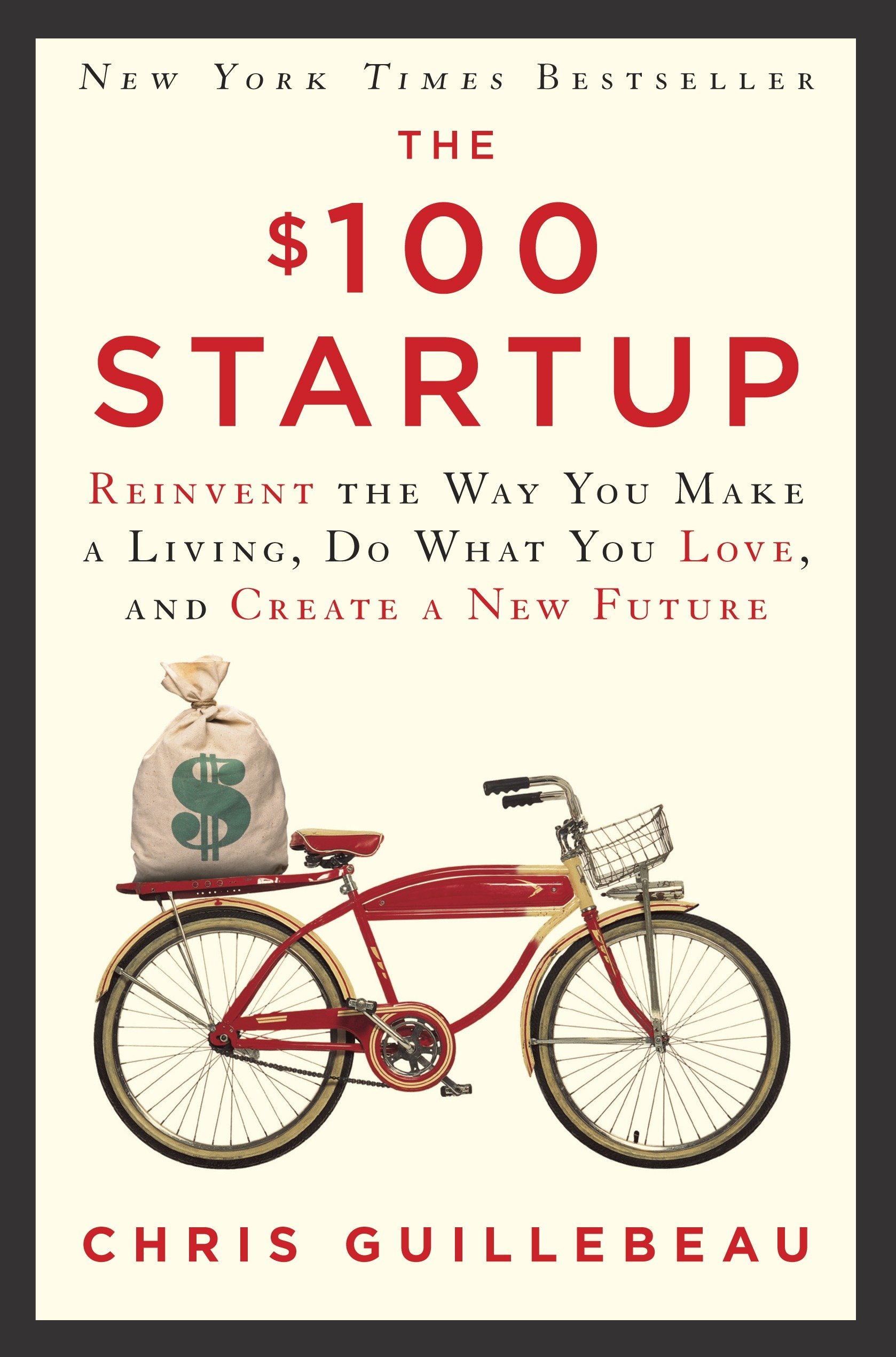
The $100 Startup

The $100 startup by Chris Guillebeau is an insightful book that contains many real-life case studies. It describes the possibility of starting and running a successful business with a tiny team. It also gives great insight on how you can start a small business of your own, giving you the ability  to live on your own terms- from positioning yourself, finding your audience and prospects, creating your products or services, marketing, scaling and leveraging.


Guillebeau identified three key areas to start a business: a product/service people are willing to pay for, a group of people who are willing to pay for it such value and a way to get paid. To succeed in business, you need to merge your passion and your skill with something that is useful and essential to other people. If you focus on providing value above all else, your business will be successful. The value in this sense means ‘helping people.’ A vast majority of people want more of some things (money, time, love) and less of other things (debt, stress, pain). The key is to focus on your added value or what pain you take away to improve their life. Give people what they really want and not what you think they should have or want instead.

The author explains that not every passion or hobby is really worth building into a business and as incredible as it sounds, not everyone will want to have a business based on passion or hobby. Many ‘follow-your-passion’ businesses are built on something indirectly related and not the passion or hobby itself. There’s nothing wrong with a hobby, but if you’re operating a business, the primary goal is to make money, that's it. Short term or long term, just make sure that making money is the focus.

A ubiquitous characteristic of successful startups is that they operate on a "plan as you go" basis. This gives the startup the opportunity to respond to the changing needs of its customers yet still get your business out as soon as possible with a bias toward action. One common mistake is thinking about your audience in terms of categories such as age, race, and gender. Instead, Chris Guillebeau recommends thinking of them in terms of shared beliefs, interests and values. A survey to understand customers and prospect is a good strategy, as long as it is concrete. The more specific and shorter the better.

When creating an offer, think carefully about the possible objections and then respond to them in advance. There is a difference between a good offer and a great offer, urgency. Immediately after a customer purchases something, that customer is hiring you. Look for small but meaningful ways to go above and beyond their expectations. They are not just buying a product or service from you, they are walking the experience with you.

It is vital to work on your business daily. Part-time or full time, work on your business every day and focus that work into key activities that improve the customer experience. Avoid just by responding to an urgent needs that accurate.  

Perhaps one of my favorite takeaways from this book is the advice to leverage skills and contacts. This approach places you in more than one place at the same time with outsourcing, affiliate recruitment, and partnerships. Ideally, you should be able to grow the business without dramatically increasing the workload, allowing you to scale without hiring more people when you make careful choices.

Select two to three metrics that are the lifeblood of your business, then check them monthly.  

In conclusion, a business that is scalable is both teachable and valuable. If you ever want to sell your business, you’ll need to build teams and reduce owner dependency.

THE BIG THREE - KEY POINTS

Key point #1: Keep it simple
Key point #2: Value action over plans
Key point #3: Set your own terms

One Last Thing
“A desk is a dangerous place from which to view the world.” —JOHN LE CARRÉ”  ― Chris Guillebeau, The $100 Startup

Good To Great

Jim Collins, an established management consultant, identifies and evaluates the factors and variables that allow a company to transition from merely good to truly exceptional in his classic,  Good to Great: Why Some Companies Make the Leap and Others Don’t. “Great”is a very subjective term, but Collins successfully defines it by a number of metrics, including financial performance, the highest the market average sustained by several periods of time. Using this particular criteria, Collins and his research team exhaustively cataloged the business literature and finding a handful of companies that matched their predetermined criteria for greatness.  

Throughout the book, Collins addresses different components that build the bridge that guides the transition from good-to-great. Among these components, we find management, operational practices,  personnel, behaviors and attitudes that are both effective and yet mutually incompatible to the good-to-great transition.

Using the criteria described above, Collines selected the following eleven companies: Abbott, Fannie Mae, Circuit City, Gillette, Kimberly-Clark, Kroger, Nucor, Philip Morris, Pitney Bowes, Walgreens and Wells Fargo.  The most crucial factor in the selection process was a period of growth and sustained success that far outpaced the market or industry average.

Collins  begin the process of identifying and explaining the unique factors and variables that differentiate good and great companies. One of the most significant differences in the quality was the leadership in the firm. Collins goes on to identify the followings five levels of leadership:

  •    The highly capable Individual: Leaders who contribute using their skill, know-how and good habits.
  •    The contributing Team Member: Leaders who are able to use their expertise and knowledge to help their team succeed.
  •    Competent Manager: Leaders who are capable of organizing the team to reach pre-determined objectives efficiently
  •    Effective leaders: Leaders who are able to create the commitment from their team to pursue a clear and compelling vision vigorously. They are also able to build a high-performing team
  •    Lastly, the Great Leaders: leaders with all the abilities of the four levels plus a unique combination of will and humility. It is the combination that makes them a great leader.

An actual level 5 leader often has a long-term personal sense of investment determination and profound humility.

Collins went further to identify the nature of leadership. He specifically states that getting the right people takes precedence over strategy, vision and almost everything. The “who” must be put before the “What.” The most valuable asset of a company is not the people but the right people. It is not just the quality of leadership that is essential to be great but the quality of the people in the team. Collins gave three principles that will help you maximize your most significant asset to become great.

  1.    When in doubt, don’t hire – Keep looking
  2.    When you need to let go of the wrong people, act right away. But do not overlook the possibility that the right person might be in the wrong position.
  3.   Put your best people on your biggest opportunities.

Another defining characteristic of the companies Collins defined as great is simplicity. Collins used the metaphor of the hedgehog to illustrate the principle that simplicity can sometimes lead to greatness.

Equally, Collins shares that the simplist way to transform from Good to Great is often not by doing many things well, but instead, by doing one thing better than anyone else in the world. Usually it takes time to identify that single thing that you can be great at, but those who do successfully identify it are often rewarded with singular success. Collins suggests using the following three criteria to expedite the process to find it: 1) Determine what you can be best in the world at and what you cannot be best in the world at; 2) Determine what drives your economic engine; and 3) Determine what you are deeply passionate about.

Good to Great has become a classic in leadership and business. If you are in a leadership position or planning to do so, grab a copy and be ready to move from Good to Great.

THE BIG THREE - KEYPOINTS

Keypoint #1:   Companies need to create a climate where the truth is heard.

Keypoint #2.    Good to great companies are motivated by inner compulsion of excellence for its own sake.

Keypoint #3.    Always confront uncomfortable truths head-on, but never lose faith that you’ll work it out.


One Last Thing:

“Good is the enemy of great. And that is one of the key reasons why we have so little that becomes great. We don't have great schools, principally because we have good schools. We don't have great government, principally because we have good government. Few people attain great lives, in large part because it is just so easy to settle for a good life.”

― Jim Collins, Good to Great: Why Some Companies Make the Leap... and Others Don't

So Good They Can’t Ignore You

In this book, Cal Newport contradicts a long-held mindset about following your passion. He believed there is more to loving what you do than just following your passion. To discover this and back up his point, he set out on a quest by spending time with a Venture capitalist, organic farmers, writers, freelancers and other passionate individuals that derive great satisfaction in what they do.  In this quest, Newport identified strategies used and pitfalls avoided by these individuals in developing their career. Passion comes after you have invested in becoming excellent at something valuable not before you attempt something. Aligning your career with your pre-existing passion does not matter. “So Good They Can’t Ignore You” will change your perspective about your passion, career, happiness and developing a remarkable lifestyle."


Steve Mark likes to say “be so good they can’t ignore you” irrespective of your level in your career. Whether you are just starting up, or you are a professional trying to move to the next level, your target should be to master your craft to the point where people can’t help but notice you. Being passionate about what you do is a great goal but following your passion will not get you there. There are two fundamental problems attached to following your passion:


Firstly, it assumes that people have a pre-existing passion they can identify and use when making career decisions. However, most people end up feeling lost because they have no idea about what they want to do.


Secondly, there is an assumption that says if you like something you will really like doing it for a job. “We don’t have an established evidence that is true,” Newport says. People passionate about their work has little to do with whether their job matches their pre-existing passions.  The bottom line is let your passion follow you in your craft and become someone that can’t be ignored and not to follow your passion. Try something interesting to do, find a skill and career path to pursue and if you are stuck at a crossroad, flip a coin. Make your skill valuable by reaching a high level of expertise. For example, many people look down on a linguistic major for being impractical. You can be very good at a particular type of writing; it will make you stand out. People who are passionate about their work develop the passion over time after building their skill to the point that they became rear and valuable.


To become so good at what you do, you need to master that skill through deliberate practice. Once you have chosen a career path, the next step is to master the skills in it to become irreplaceable. “You don’t have a leverage until you become so good.” Says Newport. Look out for simple and common mistakes that show up every day when working on your skill and don’t stop getting better. Many people build their skill to a stage that they become so comfortable and they stop improving on it. It is a deadly risk. To avoid this, push yourself beyond the comfort zone and continuously practice your skills just the way athletes, musicians or artists would.


Finally, you have to be good at something before big things start to happen. Don’t stop building on your skills. Be so good that you can’t be ignored.


The Big Three - Key Points


Key Point #1: Do not follow your passion. Let your passion follow you and learn how you can grow your mindset around your passion.


Key Point #2: To become so good at what you do, you need to master that skill through deliberate practice. You don’t have a leverage until you become so good.


Key Point #3: Push yourself beyond your comfort zone and continuously practice your skills just the way athletes, musicians or artists do.

One Last Thing

So Good They Can't Ignore You Quotes Showing 1-30 of 224

“Passion comes after you put in the hard work to become excellent at something valuable, not before. In other words, what you do for a living is much less important than how you do it.”

Cal newport, So Good They Can't Ignore You: Why Skills Trump Passion in the Quest for Work You Love