The 5 Levels of Leadership

John Maxwell, a leadership expert, and by far my favorite leadership author takes us through what he has researched as the five levels of leadership maturity. In this book, The Five Levels of Leadership, Maxwell describes how to recognize and manage these levels in an organization and what you can do to grow to the next level of leadership.


The 5 levels of leadership are:

Level 1 - Position: people follow because they have to, because of your position

Level 2 - Relationship: people follow because they want to

Level 3 - Production: people follow because of what you have done for the organization

Level 4- People development: people follow because what you have done for them

Level 5 -Respect: people follow because of who you are and what you represent

In the first level of leadership, Leadership is based on your position. It's considered the entry level to the leadership ladder, being the lowest. John makes it clear that because someone is a boss does not necessarily mean he or she is a leader and some people will not get past level one. Advanced leaders understand that being the "boss" is so low in the level of influence, that they don't label themselves as "boss" or mention that they're the boss.  Getting a title means that someone in the organization believes in the potential of you growing up to be a leader. Getting your title is an invitation for personal growth and the first challenge will be to gain the trust so you can have a chance to grow to the next level.

The second level of leadership is based on permission. In this level, leaders are starting to develop their influential reputation because of their relationship and because how that relationship improves their team productivity. People follow you beyond your authority because they trust you and they believe in you and what you're trying to accomplish. Building strong relationships enables people to support you instead of merely following orders. Leading through connections breaks down barriers to communication and deepens trust throughout the organization. The most natural step to grow into this level is to show interest in your colleagues at a personal level. A staff member is not just an employee, they also have a home, a family, their health struggles and personal traits.

Leadership based on results is the third level.  This is a sweet spot for organizations. This is the level where leaders are making things happen, having functional teams, and are getting results beyond the areas assigned to them. At this level, the leader can produce for themselves as well as for the team.  It is crucial that you as a leader define your vision and can explain why it is essential for the organization. It is that vision that will attract other producers and create an environment for collaboration.

Productive leaders are fully aware of the value that they bring to the table. They don't try to play to the strengths of other leaders or try to imitate or mimic the work of other leaders. Because they understand their value, they are phenomenal in allocating resources appropriately, especially time. Maxwell recommends for a leader to be productive, they must assign their time as follows:

80% of the time on tasks within your strengths zone

15% of your time on tasks within your learning zone

5% on work outside your strengths zone

And 0% within your weakness zone

Leaders that fail to understand their strengths and value cannot measure their value or build measurable results within the team. This ability is very important to grow to the fourth level of leadership. If you want to move from level 3 to level 4, you must have a clear understanding of your value and strengths and dedicate the majority of your time on this.

The fourth level of leadership is leadership based on people development. To be successful at this level, John Maxwell suggests to regularly delegate your tasks when somebody else can do the same job in 80% or more of your efficiency. To develop others, you as a leader should always work on delegating your responsibilities to others. A leader in level 4 should spend about 80% of his time coaching colleagues and 20% with productive work. A critical piece to understand is the importance of focusing on developing people with the highest potential to becoming the next generation of leaders.

The fifth and final level of leadership is called the Pinnacle, leadership based on respect. This level is reserved for leaders such as Martin Luther King, Steve Jobs and Nelson Mandela to name a few. Level-five leaders are legacy-makers, they are iconic. Finding a level-five leader is rare. To reach this level requires a unique balance between understanding and mastering leadership skills and naturally having leadership abilities. Their influence is transcendental. These are leaders who are mentioned long after they have left the organization and the world.  This level of leadership is iconic. Even people that fundamentally disagree with them, end up at a minimum, respecting them.

The five levels of leadership are not about a personal scale of leadership but instead about creating and building leaders.

THE BIG THREE - KEY POINTS

Keypoint #1- The first person you must examine and understand is yourself. Become more self-aware. Connect with yourself before trying to connect with others.


Keypoint #2 - People buy into the leader and then they buy into the vision.

Keypoint #3- Keep developing your strengths and your ability to lead. Even more important, build the strengths and leadership skills of those around you.

One Last Thing

“Change will not come if we wait for some other person or some other time. We are the ones we’ve been waiting for. We are the change that we seek.” – President Barack Obama

The First 20 Hours. How to Learn Anything Fast

The First 20 Hours was written with an intention to enlighten people on how to rapidly acquire a skill. The key to learning any skill is to have a clear definition of what you think will be "good enough" and focus on the small parts that make that “good enough” skill. The author, Josh Kaufman, tailored the three major areas of this book towards principles to learn effectively. He organizes them in three key components:

1- Rapid Skill Acquisition

2- Effective learning

3- Effectiveness of the approach

RAPID ACQUISITION SKILL

Rapid skill acquisition is a way of breaking down a particular skill into the smallest pieces possible for easier processing then identifying which of those pieces are most important and deliberately practicing those elements first.  There are four steps in RapidSkill Acquisition process.

First you need to deconstruct the skill into the smallest possible subskills; the second step is to learn enough about each subskill in order to practice intelligently and self-correct during practice; the third step is to remove any mental, emotional and physical barriers that may get in the way of practice; and lastly, practice the most important sub-skills for at least twenty hours.

EFFECTIVE LEARNING

Any time you start practicing something new, your skills will naturally improve in a very short period of time. The key is to start practicing as soon as possible. Not thinking about practicing or worrying about practicing, but actually practicing. By just simply practicing, the skill set will start escalating. To guarantee the process of practicing is effective, take into consideration the following:

1.    Identify mental models and mental hooks.

2.    Talk to practitioners to set expectations.

3.    Eliminate distractions in your environment.

4.    Use spaced repetition and reinforcement for memorization.

5.    Create scaffolds and checklists.

6.    Make and test predictions.

7.    Honor your biology.

EFFECTIVENESS OF THE APPROACH

Not only does Josh talk the talk, but he also walks the walk when it comes to the principles guiding Rapid Skill Acquisition and effective learning. To put them to the test he chose six skills he was interested in learning,

•    Yoga

•    Programming

•    Touch typing with a Colemak keyboard layout

•    Playing Go

•    Windsurfing

•    Ukulele

Josh puts 20 hours into practicing each skill and he didn’t withhold the feedback. A more significant part of the book is devoted to his experience in these skills. Briefly, programming which is one of his “wants to acquire” skills was a big hit. He wanted to create a functioning web application.  But guess what, He did not spend the precious hours stuck in textbooks, NO, he rather focused on basic elements of creating a program and then applied a “build – test – fix” approach to honing it into a working prototype. He utilized the full 20 hours, 10 of which were spent on research and the remaining 10 on the programming.  In the end, he had a couple of working software solutions. It was a breakthrough.

On a final note, the only time you can choose to practice is today. Not tomorrow. Not next week. Not next month or next year. Today. So, to all my life learners and self-taught folks... when you wake up in the morning, you have a choice and this book helps you to make the right choice. Stop procrastinating and start learning. It will take just 20 hours.

THE BIG THREE - KEY POINTS

Key point #1 - Always make the next skill you’re going to learn the one you’re most excited about.

Key point #2 - Think about emotional and real-life obstacles beforehand.

Key point #3- Initially, focus on quantity over quality.

One Last Thing

“Anyone who has never made a mistake has never tried anything new.”

― Albert Einstein

The Amazon Way

John Rossman, a former Amazon executive, weaved his own war story at Amazon around their 14 leadership principles. He colorfully brought them to life using personal and insightful commentaries. The Amazon Way reveals the leadership 'secrets' behind one of the most disruptive companies in the world. While these stories are no secret, Rossman effectively aligns them with Amazon’s guiding principles that can be applied to all decision making processes, both business and everyday life, and can be used every day by every employee.

The Amazon 14 Leadership Principles:

  1. Obsess over the customer
  2. Take ownership of results
  3. Invent and simplify  
  4. Leaders are right – A lot
  5. Hire and develop the best
  6. Insist on the highest standards
  7. Think Big
  8. Have a bias for action
  9. Practice frugality
  10. Be vocally self-critical
  11. Earn the trust of others
  12. Dive deep
  13. Have backbone - Disagree & commit
  14. Deliver results


  1. Obsess Over the Customer

Put yourself in the customer’s shoes and deduce even their unwanted needs. Most times, we only listen to what our customers want and fail to go deeper into what they really need or what they could need in the future. Nothing replaces a "nothing but awesome, beyond this universe" customer satisfaction. Being obsessed over the customer is the central dogma in every aspect of Amazon From the website login page, the actual site, the display of products and services, to how they managing complaints. In a nutshell, yes the customer is not always right, but Amazon makes sure that your process and experience does not make you, the customer, realize that.    

  1. Take Ownership of Results

Every employee at Amazon acts as an owner. From the leader to the guy helping loading trucks, no one says, “that's not my job.” They always work on behalf of the entire company. If there's a more effective way to clean the toilet, they will test and implement. Amazon believes that Senior employees should also relate with customers, answer queries, go out for interviews or make a couple of sales calls. These strategies will help get first-hand feedback and truly understand the user/customer and instead of a filter version. Regardless of your role in the organization, everyone is responsible for taking ownership of delivering the best customer experience possible and the small details that it involves.  Amazon's compensation plan rewards long-term thinking – in as much as employees typically get stock options rather than lavish salaries or excessive perks. Take absolute responsibility for everything under your purview, even that which is done by some other team. Have a fall back for them so you can own the result and not blame it on someone else.

  1. Invent and Simplify  

Amazon has built-in systems that identify less than perfect customer experiences and then provides refunds, then works to perfect the customer experience. Amazon innovates at scale. Employees are expected to design and build innovations which will make things better for millions of customers and tens of thousands of partners.

Determine what your customers need and walk backward, even if it means learning a new skill.  Simple sells much more than complex, so think big. The most radical innovations are those that help others unleash their creativity.

  1. Leaders are Right – A lot

Develop robust frameworks for decision making. Great leaders use it all the time and articulate to the team for effective decision making. Embed real-time metrics right from the start of an initiative.  Avoid minimization framework. Sometimes, we have to ask ourselves the question of “will I regret having done this/not having done this when I am 80?” This helps give a good perspective of things that might seem confusing now and helps to separate the short term from the long term. It is easier to stop things from happening then it is to make things happen. Leaders at Amazon understand details and metrics two to three level deeper than leaders at most other companies. Flourishing companies are filled with bright people who have the authority to achieve but also the confidence that if they fail, somebody will pick them up, dust them off and give them another chance.

  1. Hire and Develop the Best

Here is a question that you will hear every day, at every meeting or informal conversation among Amazonians. How are we raising the bar here? And this is even more important when hiring new staff members.  As part of the hiring process, Amazon has a team of Bar Raisers. It is the responsibility of the Bar Raiser to assess if the candidate is bringing to Amazon a set of values and skills that is making Amazon better. Every new hire should not just match Amazon values, but bring extra value that will raise the bar of Amazon as a whole. Amazon's hiring process is famous for its rigor. It is not unusual for potential new hires to go through twenty or more interviews over a five- or six-week period before a decision is made.

  1. Insist on the Highest Standards

Amazon leadership expects nothing less than every employee thinks and act like a leader or, at a minimum, a leader in training. This approach forces every  Amazonian to step us their game and keep raising the bar for themselves and for the team.

  1. Think Big

One of the most impactful leadership principles for me is this one, mainly because of the point of view of the Amazonians, in the thinking big process. For someone to continually think big, they have to destroy the previous paradigm. The must move away from the way they were thinking yesterday. For this reason, for every Amazonian, every day is DAY ONE. To keep up with Bezos and his leadership, you have to come prepared to “go big in your thinking or go home.” As a reminder, a building in Amazon’s headquarters is labeled DAY ONE. It is a reminder of the mindset under which you should be every day.

  1. Have a Bias for Action

The status quo is not a status. It is mostly an insult for Amazonians.  Amazon's leaders err on the side of taking action. To promote action, every quarter, the company holds an all-hands meeting where awards aligned with Amazon's values are given. By far, one of the most prestigious awards is named the "Just Do It” award, which encourages leadership to try new things all the time rather than suffering from analysis paralysis. This is another reminder of the high tolerance for initial failure that the organization promotes.

  1. Practice Frugality

Amazonians don't spend resources on things that would not be of importance to customers. All resources (money, time, energy) are managed with a frugal mindset. This breeds resourcefulness, self-sufficiency and innovation. The bottom line is that it doesn't take a genius to throw money and complexity at a problem. Amazonians are expected to know better.

  1. Be Vocally Self-critical

"Open your Kimono". In Amazonian-lingo, this means that you are expected to be open to criticism and to speak up when things are not going as planned.  Doing that is more comfortable than covering things and hoping for the best. Open your Kimono or go home.

  1. Earn the Trust of Others

Jeff Bezos’ expectations of his leadership is to operate in the same way he works with them. Everyone should contribute to an atmosphere of trust at Amazon. The key is to encourage everyone to embrace and live the 14 principles and when in doubt, or conflict, Amazonians should contrast the conflict or doubts versus the principles.  

  1. Dive Deep

For Amazonians, there is no doubt in what ownership means. Ownership equals accountability. Therefore, Amazonian leaders understand the expectations of getting involved in the details of every project they are responsible for.

  1. Have a Backbone - Disagree & Commit

Often Jeff Bezos describes Amazon's culture as being an intense-friendly environment. No PBS (Political Bull Shit) is allowed and everyone expects people to challenge each other. This includes Bezos and his ideas and he demands robust conversations.

  1. Deliver Results

These principles are designed with one goal in mind: delivering the most amazing customer experience, beyond the level of quality expected, on time and as a team.

In conclusion, Amazon's leadership principles are tactical in nature however they drive everyday decisions and actions. If we take into consideration that Jeff Bezos holds the record as the wealthiest person in modern history and Amazon, the most disruptive organization of our time, any leader should pay close attention and use the 14 principles as prescriptions for their teams.

THE BIG THREE - KEY POINTS

Keypoint 1: The very best kind of customer service is no service at all – everything just works.

Keypoint 2: The first step to fixing a problem is acknowledging that it exists.

Keypoint 3: Minimize time and energy spent on routine interactions and instead spend time on innovation.

One Last Thing

“If you're competitor-focused, you have to wait until there is a competitor to do something. Being customer-focused allows you to be more pioneering.” - Jeff Bezos

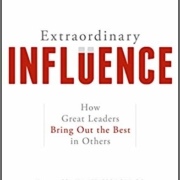
Extraordinary Influence

It’s no secret, anyone who has ever lead a parent, a boss, a teacher or a coach, would love to know the recipe for bringing out the best in others. In this  book, Extraordinary Influence, Dr. Tim Irwin explains the power of affirmation. He outlines the powerful approach to motivating others and shows us the key to sustaining peak performance in the organization by motivating people to extraordinary performance through affirmation, inspiration and positive influence.  He says “although it is very satisfying to know deep down that we are pursuing purpose, perhaps the most personal affirmation occurs when another person acknowledges the strength of our character. When someone of significance affirms us particularly in a deep way, certain beliefs are formed. These beliefs are stored in our core (that person living inside of us who thinks, feels, forms opinions and quietly speaks to us). As opportunities and circumstances occur, beliefs direct our actions. Research has shown that affirmation from others whom we respect forms beliefs in our core that guide our actions."

Affirmation from those we respect, admire and love profoundly changes us. As we incorporate and utilize words of affirmation, we begin to influence others and bring out the best in them. Criticism focuses on defects while affirmation strengthens abilities and achievement in a positive manner.

Dr. Tim Irwin also shows the difference between being polite and compliments.  He said “compliments are by their very nature superficial social rituals." But  they are perfect for our social well being and needed in our lives as political and civilized beings.  As humans, there is a need for affirmation at different levels but most importantly at our core. Both the words we use and the frequency in which we give the affirmation are equally important. There are things that need to be affirmed on a daily basis, others weekly and monthly.  

Also, in organizations, employers need to foster intrinsic motivation so that individuals will grow to becoming better employees, better athletes or better students. The method used in providing feedback to employees such as performance appraisal or multi-rater feedback systems sometimes accomplish the opposite of what we intend. We inadvertently speak words of death instead of words of life. Many brain research studies have demonstrated  that these methods tend to engage a natural “negativity bias” that is hardwired in us all. How do we redirect employees who are out-of-line without engaging our natural negativity bias? The author urges leaders to ban the term “constructive criticism”. Brain science also tells us that we can establish a connection between the employee’s work and his or her aspiration.

Dr. Tim Irwin does a great job in explaining the biological and physiological responses of humans when facing  criticism vs. affirmation. When criticized, the amygdala (specific part of the brain that allows human to feel and perceive certain emotions) activates, decreasing attention and decreasing the higher functions of the brain. In contrast when we receive affirmation, the higher functions of the brain are activated bringing out activities such as creativity and productivity.

The author asks a thought-provoking question:"what would happen if we applied these principles of affirmation more broadly?” His response was a food for thought. He says, “my opinion is that the research I referenced throughout the book is prescriptive for individuals; however, we as a society would be much more likely to flourish if we became more affirming and less critical."  This book explains a new approach to align staff members with an organization’s mission, strategy and goals.


THE BIG THREE - KEY POINTS

Keypoint #1: As opportunities and circumstances occur, beliefs direct our actions.

Keypoint #2: Affirmation from others whom we respect forms beliefs in our core that guide our actions.

Keypoint #3: Criticism focuses on defects while affirmation strengthens abilities and achievement in a positive manner.


One Last Thing

"Leadership is not about titles, positions or flowcharts. It is about one life influencing another." John C. Maxwell

Hit Makers

Hit Maker takes an in-depth look at what makes a viral or popular product. In this book, Thompson provides detailed research on the key factors that cause content and products to become popular. Thompson argues that the products that become popular are a balance of familiarity and newness. He cited Raymond Loewy, the industrial designer, whose approach was summed up in his acronym MAYA “the Most Advanced Yet Acceptable” idea. This theory explains that people are simultaneously Neophobic, afraid of the new, and Neophilic, attracted to the new. In order for a new idea, content or product, to be popular, it must balance this tension. It is not the most innovative or advanced products that become sought but those that blend acceptability with innovation.  He also argues that there is a need for newness, as there is a danger in too much familiarity or too much of the same content which leads to a sharp fall in popularity. There must be a balance between newness and innovation.

Derek Thompson believes that familiar ideas or content leads to more liking of the content. He quotes an interesting study where people were asked to either name two things they liked about their partner or ten things they liked. The study found that people liked their partner more if they are asked to name just two things they liked. When asked to name ten things, it became harder and they rated their partners lower after the exercise. He uses many examples where companies use familiarity, including movies. Because we like familiarity, a key ingredient of popularity is repeated exposure. Most of the top revenue grossing movies of the last ten years have been based on popular novels. There is safety and familiarity in such movies. Also, car manufacturers blend familiarity with newness by changing a car’s style every few years. Derek Thompson also explores products that manage to make it big through the combination of timing, weird circumstances and savvy use of repetition while their pairs never made a splash. After reaching a tipping point, customers do not just buy a product but the popular conversion. A great example of this is Apple products. It is no secret that Apple has somehow lost its magic when it comes to disrupting markets through innovative products and yet, it became the first American company to surpass a trillion dollar value as I write this Bite.  No one wants to be the last to read or watch so they buy to participate in the conversion.

One of my favorite sections of the book is on the power of creating popular phrases. It talks about the power of repetition. Through Thompson's lens, repetition can explain anything that is popular. He argues that human beings love music because of our love for repetition. Repetition, he says, is the God particle of music.

Hit Makers is full of “aesthetic aha”. This is a term for the moment when you look at something and for the first time, you understand and everything just clicks and comes together. The moment when you read an essay’s thesis and feel that it’s expressing something you’ve thought of before but never had the chance to put into words. It is that moment when your eyes light up because something clicked and was understood in your brain, the "aha moment." It is beyond the feeling that something is familiar. It’s when something new, challenging or surprising that opens a door into a feeling of comfort, meaning or familiarity.

THE BIG THREE - KEY POINTS

Key point #1: Popularity will always be found in the balance between familiarity and newness.

Key point #2: Repetition is key in creating popular and viral phrases.

Key point #3: It is not the most innovative or advanced products that become sought after but those that blend acceptability with innovation.

One Last Thing

“A new scientific truth does not triumph by convincing its opponents and making them see the light, but rather because its opponents eventually die, and a new generation grows up that is familiar with it.”

― Derek Thompson, Hit Makers: Why Things Become Popular

The Innovation Secrets of Steve Jobs

Carmine Gallo is a communication skills coach who works with leading companies like Intel, IBM, Chase, The Home Depot, Bank of America and others. He is the founder of Gallo Communications, a consulting firm.

In this book, Gallo talks about fundamental principles that allowed Steve Jobs to innovate brilliantly constantly. This book offers seven general principles that Steve Jobs applied to achieve genuine breakthrough success.

PRINCIPLE #1 - DO WHAT YOU LOVE: Passion is everything. Innovation is a new way of doing things that improves our lives. Innovation cannot flourish unless you are truly obsessed with making something better, be it a product, service or career. Steve Jobs says “have the courage to follow your heart and intuition. They somehow already know what you truly want to become.” Steve chooses to follow his heart through his entire career and that passion, he says, has made all the difference. It is difficult to come up with new and creative ideas that move society forward if you are not passionate about the subject.

PRINCIPLE #2 - PUT A DENT IN THE UNIVERSE: Aspire to change the world. Innovation does not take place in a vacuum. You need to know what your ultimate destination is and you need to inspire others. Steve Jobs never underestimated the power of vision to move a brand forward. He set out with a vision to change the world and he pushed through with his vision. What is your vision for your product, brand or career? If there is one fundamental characteristic that every innovator has, it is seeing things not for what they are, but for what they could be. The famous Steve Jobs’ quote of putting a dent in the universe refers to having a vision of creating what was not there before. To innovate, you have to be able to see it before anyone else does.

PRINCIPLE #3 - KICKSTART YOUR BRAIN: This appeals to creativity. Creativity leads to innovative ideas. Job believes that a broad set of experiences expands your understanding of the human experience. A more comprehensive understanding leads to breakthrough that others may have missed. Breakthrough innovation requires creativity and creativity requires that you think differently about the way you think. Steve jobs say “creativity is just connecting things.” Steve Jobs created new ideas because he spent a lifetime exploring new and unrelated things. Look outside your industry for inspiration.

PRINCIPLE #4 - SELL DREAMS NOT PRODUCTS:  Your customers don’t care about your product, your brand or your company. They care about themselves, their dreams, hopes and ambitions. To win them over, you have to help them fulfill their dreams. A lot of times, people think they are crazy, but in that craziness we see genius.

PRINCIPLE #5 - SAY NO TO UNNECESSARY: Steve Jobs says “Innovation comes from saying NO to one thousand things to make sure we don’t get on the wrong track or try to do too much.” Jonathan Ive, Apple design guru says: “We are absolutely consumed by trying to develop a solution that is very simple because as physical beings, we understand clarity.” Customers demand simplicity, and that requires you to eliminate anything that clutters the user’s experience.

PRINCIPLE #6 - CREATE AN INSANELY GREAT EXPERIENCE: Don’t move product, instead enrich lives and watch your sales soar. People don’t want products, or even services for that matter. They want to know what they can do with them. Jobs has made the Apple store the gold standard in customer service by introducing genuine innovation that any business can adapt to create a deeper more emotional connection with their customer. For instance, in an Apple store, there are consultants, experts and even geniuses,  but no cashier. Tony Hsieh, Zappos CEO said, “ if you just think about what makes customers and employees happy, in today's world, that ends up being good for business as a whole." As leaders, we are called to design a working environment in which our teams can feel themselves and be creative. Design an insanely great experience for the customers and equally for the staff members.

PRINCIPLE #7 - MASTER DELIVERING THE MESSAGE: You can have the most unique idea in the world, but if people can’t get excited about it, it doesn’t matter. Steve Jobs is considered the greatest corporate storytellers worldwide because his presentations inform, educate and entertain. There are no bullet points in Steve Jobs presentations. Instead, he thinks visually and iconically; therefore everything he touched was iconic:  Apple, Pixar, iPod, iPhone, iPad, iMac and himself.

Innovation takes confidence, boldness  and discipline to tune out negative voices. As Jobs said, “Don’t let the noise of others opinions drown out your inner voice.”

THE BIG THREE - KEY POINTS

Key point #1: Design amusement parks for the mind where staff members and the customer can live an excellent experience. Capture those experiences in processes and innovation will flow.

Key point #2: Innovation is for people that sound crazy. The thing about smart people is they sound crazy to dumb people. Surround yourself with crazy.

Key point #3: Never underestimate the power of vision to move a brand forward.


One Last Thing

"When you grow up you tend to get told the world is the way it is and your life is just to live your life inside the world. Try not to bash into the walls too much. Try to have a nice family, have fun, save a little money.”  That's a very limited life.

Life can be much broader once you discover one simple fact: Everything around you that you call life was made up by people that were no smarter than you and you can change it, you can influence it, you can build your own things that other people can use.

Once you learn that, you'll never be the same again."  ~ Steve Jobs

The Presentation Secrets of Steve Jobs

The Presentation Secrets of Steve Jobs covers everything from the basics of presenting, including structure and concepts on slide design, to scripting and the detailed dress rehearsals that set Jobs’ success apart from others. Steve Jobs was always eager and hungry to learn, advance and excel. His philosophy was to do what you love, view setbacks as opportunities and dedicate yourself to the passionate pursuit of excellence. The author, Carmine Gallo, does an excellent job dividing the book into three sections he calls acts. The first act is about creating the story that you want to deliver in the presentation. The second act is all about the stage; how to not lecture but rather give an extraordinary experience on the stage. The third act is about refining and becoming better. Let’s take a deep look  into each act:

ACT 1 - CREATE THE STORY

Develop a messianic sense of purpose. Jobs has been giving astounding and inspiring presentations for decades. A very famous one was during the unveiling of the first Macintosh in 1984.  From the stage, before the entire room goes totally dark, he says, “You have seen some pictures of Macintosh, now I want to show you Macintosh in person. All of the images that you're about to see on the large screen will be generated by what is in that bag."  What happens next is a crowd applauding and cheering every step of the way. Without saying a word, Jobs shows how easy it was to take the Macintosh out of the bag and how the entire presentation fit in a packet through a floppy disk. The audience laughed and applaud. For the first time, the world saw a computer with multiple fonts, the ability to play chess and serve as a calculator. He walked back to the microphone and delivered his final pitch, "Now, we’ve done a lot of talking about Macintosh recently, but today for the first time ever, I’d like to let Macintosh speak for itself."  He walked back to the computer and the big screen displayed the words "Hello, I am Macintosh. It sure is great to get out of that bag..." The computer then cleverly “throws a punch” at IBM by saying "Never trust a computer you can’t lift." The crowd couldn't get enough of it, applauding and cheering. Probably one of the most exciting four minutes of any product launch presentations ever made. Yes, Steve and his Macintosh delivered the messianic message that "from this point on, COMPUTERS ARE PERSONAL!”

Even now, that launch remains one of the most dramatic presentations in corporate history.

Below is the link for your enjoyment. It’s worth the watch!

https://www.youtube.com/watch?v=8bepzUM1x3w

Do what you love. This has been Steve Jobs’ secret to success. He says, “ You’ve got to find what you love, going to bed at night saying I have done something wonderful, that’s what mattered.” He was inspired by a purpose beyond making money. Jim Collins says some managers are uncomfortable with expressing emotions about their dreams, but it’s passion that will attract and motivate others.

  • Plan in Analog: the most important thing you can do to improve your presentation dramatically is to have a story to tell before working on your powerpoint. Genuinely great presenters like Steve Jobs visualize, plan and create ideas on paper or whiteboards well before they open their PowerPoint software. Nancy Duarte recommends that a presenter spend 90 hours on 30 slides. But only one-third of the time is spent building slides. Another third rehearsing, but the first third is spent collecting ideas, organizing ideas and selecting story.
  •   Create Twitter-like Headlines.
  •   Stick to the rule of 3: Create the story, deliver an experience, refine and rehearse.
  •   Introduce the antagonist.

ACT 2 - DELIVER THE EXPERIENCE

  •  Eliminate clutter: Steve Jobs made it clear by saying simplicity is the ultimate sophistication. He spent more time taking things out of the slides. In his view, an image, a single word or a simple sentence was more than enough to be used as a visual aid.
  •  Reveal a “holy shit” moment: People will forget what you said, but they will never forget how you made them feel. Create an emotionally charged event ahead of time. Identify the one thing that you want your audience to remember and talk about long after your presentation is over. For Steve Jobs, this became his trademark, "One More Thing..." He used it at the end of every presentation. It was his HOLY SHIT moment that many looked forward to. FaceTime and iTV (AppleTV) were both originally introduced as the “One More Thing.”

Note: If you haven't yet noticed, every Bite has a section called “One Last Thing.” It was inspired by the desire to create one final “Holy Shit” moment for the reader, leaving him or her pondering the message or argument.

ACT 3-REFINE AND REHEARSE

  • Master Stage Presence: Steve Jobs has a commanding presence. His voice, gestures and body language communicate authority, confidence, and energy. He maintains eye contact, open posture and hand gestures with the audience. Body language delivery, all are very important. Cisco researched and found that the body language and vocal tone account for about 63% of communication. You can only improve your body language and vocal delivery when you practice.
  • Wear appropriate costume: Steve Jobs is the anti-Cher. When you invent revolutionary computers, music players and smartphones, your audience will give you permission to dress any way you want.
  • Have fun: Don’t lose sight of the fact that the audience wants to be informed and entertained. Each of Jobs’ presentations is “infortainment.” He teaches his audience something new, reveals new products and has fun doing it.

Steve Jobs said, “Your time is limited, so don’t waste it living someone else’s life. Don’t be trapped by dogma — which is living with the results of other people’s thinking. Don’t let the noise of others’ opinions drown out your own inner voice. Stay hungry. Stay foolish.”


THE BIG THREE - KEY POINTS

Key point #1: People will forget what you said, but they will never forget how you made them feel. Infortain your audience!

Key point #2: Plan and deliver a “Holy Shit” moment. This is as critical as the presentation itself.

Key point #3: Presentation principles are not limited to the stage, a document or a product. A conversation can benefit from the same principles as long as you want to be unforgettable.


One Last Thing

“People would confront a problem by creating a presentation. I wanted them to engage, to hash things out at the table, rather than show a bunch of slides. People who know what they’re talking about don’t need PowerPoint.” Steve Jobs, Biography by Walter Isaacson

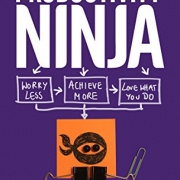
How to be a Productivity Ninja

Graham Alcott discovered the low level of productivity caused by information overload in the twenty-first-century workers; therefore he took a deep dive into his book, how to be a productivity Ninja where he shows how to worry less, achieve more and love what you do. In this book, Graham combines all his teachings from his public productivity workshop from all over the world into a simple and practical guide to working faster and smarter.

The goal of this book is to teach you how to overcome procrastination, how to use email more effectively, and new ways to increase your personal time and how to de-clutter an information overload.

Graham identifies stress as one of the critical components for procrastination, within the first chapter he goes into details on how stress agent is created and our ability to deal with them. The author identifies several causes of stress agent among which he listed conflict, overload panic, fear of being foolish among others. He continues by highlighting the aspects of developing a mindset of a Ninja to use in your productivity. This is about living in the present moment and not thinking about what you need to do or worrying about tomorrow. People’s best work happens when they are present and live in the moment.

One of the key components of the book is attention management. We often read about how important our time is, but attention is finite and should be used as a precious resource more than our time, at the end of the daytime alone has no real value, it is the action in time what gives value to time. He went further to state that the key to productivity and ultimately the application of this precious resource will determine your success. He developed an equation to back up his point which is:

TIME + THE RIGHT ATTENTION AND FOCUS = DONE

He categorizes attention as follows:

  •    ACTIVE: Ticking along but flagging a little
  •    PROACTIVE: Fully focused and alert
  •    INACTIVE: Light is on but no one at home

The author also proposed several strategies to maximize periods of proactivity. This includes taking yourself away from distraction and improving concentration then use mechanism for managing task and determining what to do at any given time. Graham proposed the CORD Model.  CORD is an acronym that stands for Capture, Organise, Review and Do. The first two C and O requires for you to operate in ‘BOSS mode’ while the last two will be R & D needs to perform in “worker mode.”

CAPTURE: means collecting ideas and new tasks quickly and efficiently. This allows you to take distraction out of the way soon and get back to the task at hand.

ORGANISE deals with the appropriate filing of the collected task. The task to be organized in lists and give a sense of scales; therefore activities spanning months are not mixed in with tasks requiring minutes. The goal of this model is to ensure that when operating in execute mode, we are clear on what needs to be done and what is committed to at the moment of executing.

REVIEW:  The review process is a formal and regular look across the tasks to be done taking all things into account like context, priorities, what is needed, waiting for items, etc. after the review is complete, the next step is doing.

DO: Graham outlines an excellent separation between the worker and boss views when he explains the different dashboards that are available to each.  The dashboard contents for each are the followings:

Boss mode:

  • Waiting  for list
  •  Masters action
  •  Calendar
  •  Good idealist

Worker mode:

  •    Master Action List
  •    Calendar
  •    Daily list

THE BIG THREE - KEYPOINTS

Key point #1: Say NO to as many distractions as possible

Key point #2: Knowing what tools to use but being clear about what the tools are will save you time and not provide distractions.

Key point #3: Have good systems to help you react and respond quickly.

One Last Thing

A productivity ninja is not a superhero, but they often do a great job in appear so. Graham Alcott, Productivity Ninja

LEAN B2B: Build Products Businesses wants

Lean B2B is a book that was birthed out of several business successes and failures. A little story about why the author wrote Lean B2B. Garbugli, alongside his ex-business partner, decided to start a business that would eventually become HireVoice, a platform to help the industry understand how the market perceives them as employers (employer brand monitoring). At first, there was a series of positive feedback but after the first few modules failed to capture the engagement with the prospects, they discovered that employer brand perception was not enough of a critical problem for companies to pay for their solution. In the end, they failed to build a sustainable business but succeeded in in-validating a startup. It was a successful validation with an adverse outcome. It took Garbugli and his business partner six months to in-validate their first two products, but only three months to invalidate the last three. Garbugli says “Inappropriate B2B customer development cost us four months of runaway and therefore Lean B2B is written to help entrepreneurs save those four months.”

Lean B2B (business to business) is not business a management or product development book. It’s a book about discovering problems that matter and being efficient as possible when going from idea to product-market. The goal of any startup is not to be a startup. A startup is a temporary organization designed to find a reputable and scalable business model. An entrepreneur who is willing to dig deep into the value chain and the into needs of the enterprise will find opportunities for breakout products. They just need the patience and product to see a chance to enter the market. B2B markets are generally much smaller compare to B2Cs. Burning leads in B2C might not be a big deal if the market has millions of potential customers but, with the substantially small market in B2B, burning leads quickly becomes a big deal. To succeed in B2B, entrepreneurs need to build deep relationships with a relatively small number of companies.

Where does it start? The only thing that matters in the first 12-18 months of a company is figuring out how to get your products into the hands of the right people. You have to identify the customers you would like to sell to. The ideal customer is an organization who matches, at a minimum, two of the following criteria:

  1. Has a problem
  2. Is aware of the existence of the problem
  3. Has already tried to solve the problem and failed to address it
  1. Is not happy with the current solution to the problem
  2. Has a budget to get the problem fixed

When you are a startup, client development is the most vital activity you can do. You can develop a product, raise capital, hire a team and incorporate your business but if your product assumption doesn’t match the market needs, you’ll eventually regret having done any of those things. Your startup process will depend on your ability to be laser-focused on finding the ideal product for the right market and not burning all the money in the process. Analytics, responsive design, domain name, branding, press, etc. are not keys to your success. Without the product that people want, the perfect press release or analytic set up will never matter. Forget about vanity metrics and think small. You need to focus on P-M fit (Product-Market fit). This is when you have five passionate customers. The temptation will be strong to start optimizing and building sales channel before reaching P-M fit but resist it. Don’t build a company before you reach P-M fit. Keep your burn low.

In my professional life, I have started dozens of organizations, some with excellent results, others not so much. In the process I have read many books on startups and entrepreneurship. Lean B2B is one of the most practical and closest to real-life experience you can find. This book teaches how to build credibility with prospects, put your products into the hands of early adopters, conduct problem interviews, prioritize problems and opportunities, build an MVP, prepare a pitch, conduct solution interviews, assess whether you have found product-market fit and techniques to speed up Product-Market validation.

THE BIG THREE - KEYPOINTS

Key point #1: Entrepreneurs don’t know the market or customer but they know the product vision; it feels more natural to start there.

Key point #2: The key to succeeding in B2B is to learn to think like your customer.

Key point #3: Sometimes starting with what you have is the best thing to do.

One Last Thing

Only move forward with creating a product that will be “above the bar.”

– Brian Lawley

GREAT BY CHOICE: UNCERTAINTY, CHAOS, AND LUCK WHY SOME THRIVE

Great by choice is a masterpiece of Jim Collins in-depth research. It was written in collaboration with another influential management analyst, Morten. T. Hansen.  Great by Choice aims to solve the problem of “why in spite of ambiguity, chaos, uncertainty, and market volatility, a few companies thrive, and others struggle." Collins tackles this question by comparing those who outperformed their competitors by a factor of 10 (10Xers) in given time frame and set of variables.

The authors confirm that the great companies are no luckier than good companies, average companies or bad companies. Luck does not make them succeed because even in times of chaos and uncertainty, they go on working as if nothing has happened. These companies succeed because they have acquired an antifragility trait through a process which combines discipline and preparedness. It is not something in the DNA or something you get by luck or sheer courage. It is through a process that can be learned.

The authors successfully illustrate their point with the story of conquering South Antarctica. In 1911, two explorers made dangerous trip to Antarctica in an attempt to become the first people to reach the South Pole. One was led by a Norwegian, Roald Amundsen, while the other was led by a British Navy officer, Robert Falcon Scott.  Looking at both explorers, you would expect the latter to be remembered by history. That was not the case. It was Amundsen’s expedition who won the race to immortality. Why? Simply put:

PREPARATION. Roald Amundsen didn't know where he was going, but he had a good idea of the conditions that he may be facing and spent as much time as he could researching Eskimo habits and trying all potential food sources.  Scott, on the other hand, wanted to reach the pole faster, so he carried a lot less weight and used the “untested –for-that-terrain” motor sleds. No one remembers if Scott’s team ever made it home. Neither Amundsen nor Scott knew what they would face on Antarctica, but the former did better in preparing for it.

My favorite part of the book is how much research was included. The authors analyzed the companies which beat their industry indexes Y at least ten times in as many years (10X companies) and found out that they were able to overcome stressful situations because they were prepared.

Firstly, they were disciplined. They were not in a hurry to become better than anyone else; they choose consistency over a rapid rise. By setting targets for themselves and hitting them precisely year by year, they became immune to external influences.

Secondly, they were bold. Their leaders weren't interested in taking unnecessary risks and as a consequence weren’t required to be anymore of visionary than those of merely good companies.

Lastly, they were productively paranoid, just like Amundsen. The polar explorer tried dolphin’s meat to prepare for the worst-case scenario. The 10x companies do this regularly. In the event that something terrible happens, they already have a good strategy.

The 10x companies are neither more innovative nor more bolder than competitive companies; they were merely more attentive. They use bullets until they are entirely sure of their target and then they fire the cannon balls.

In conclusion, be SMaC: Specific, Methodological and Consistent. That is how discipline is implemented within a company. However, it is  only one aspect of what will help you through hard times. The other is being productively paranoid. Prepare for the worst, hope for the best!

THE BIG THREE - KEYPOINTS

Key point #1: Be Attentive. Fire the bullets, then the cannonballs.

Key point #2: Be specific, methodological, consistent and productively paranoid

Key point #3: Greatness is a long-term strategy, strengthened by a consistent discipline in tactics.

One Last Thing

"The great task, rarely achieved, is to blend creative intensity with harsh discipline so as to amplify the creativity rather than destroy it. When you marry operating excellence with innovation, you multiply the value of your creativity." Jim Collins & Morten Hanson. Great By Choice